

Revitup.Direct Blog
The hotel guest journey: a complete 5-stage guide to the guest experience
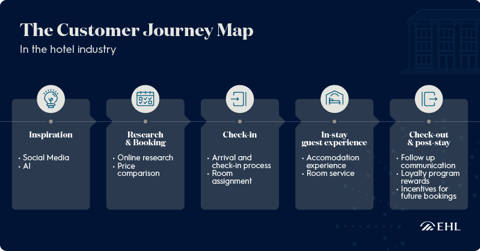
A guest's relationship with your hotel begins long before they walk through your door — and does not end at check-out.
Mapping the hotel guest journey is one of the most powerful tools a modern hotel has at its disposal. It is not a theoretical exercise — it is a practical map of every touchpoint, from the first moment of inspiration to the review left after departure.
In this article, we examine the five stages of the journey, the major trends shaping it today, and how every hotel can design an experience that makes guests want to come back.
What is the hotel guest journey?
The guest journey is the complete set of interactions between a guest and a hotel. It begins the moment a traveler starts planning a trip — even before they have decided on a destination — and concludes several days after departure.
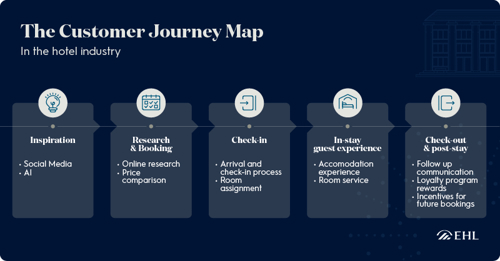
The five stages are:
- Inspiration
- Research and booking
- Arrival and check-in
- Stay
- Check-out and beyond
This journey has changed dramatically in recent years. Modern travelers expect personalized, seamless experiences, and hotels that fail to recognize this shift are losing ground.
Mapping the journey is not an end in itself. It is a way of seeing your hotel through the eyes of the guest — and identifying where friction exists, where opportunity lies, and where you are falling short.
The major trends reshaping the hotel guest journey
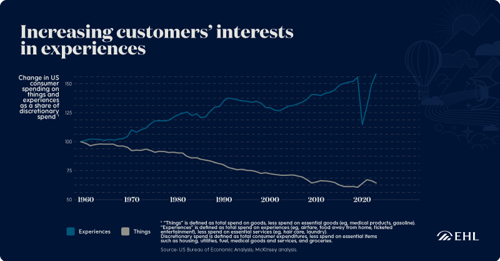
The economy of experience. According to McKinsey, service excellence is the most powerful differentiator in the service industry. Consumers are spending more on experiences and less on material goods.
Good rooms and efficient service are no longer enough. Guests are looking for something worth remembering and worth talking about.
Technology as a new baseline expectation. 73% of guests prefer hotels that have incorporated self-service technology.
However, digitalization should not come at the expense of human interaction. That balance is critical.
Personalization as a given. 71% of consumers expect a personalized experience, while 76% are disappointed when it is absent.
Personalization is no longer a luxury. It is the baseline from which a hotel is judged.
The five stages of the hotel guest journey
- Inspiration: from Google to TikTok and AI
Until recently, the guest journey began with a Google search. That has changed. TikTok and Instagram have become the primary sources of inspiration, particularly for younger generations. Visual content creates emotional connections in a way that no search result can replicate.
At the same time, artificial intelligence is bringing fundamental change. The share of travelers using traditional search engines fell from 52% (end of 2024) to 36% in 2025. Discover how AI is reshaping the hospitality industry.
What this means for your hotel: Presence on visual platforms is no longer optional. If you are not where inspiration begins, you are starting the journey at a disadvantage.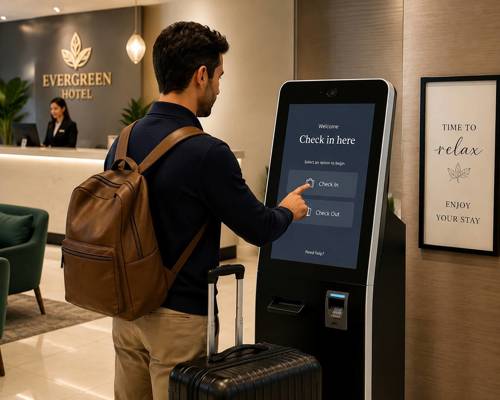
- Research and booking: from comparison to decision
Once the desire to travel emerges, the prospective guest begins to compare. They look at prices across multiple platforms, read reviews on TripAdvisor, Google and OTAs, and check location, amenities, cancellation policy, and photos.
OTAs account for approximately 55% of bookings globally. Their convenience is undeniable, but commission costs significantly compress profit margins. Emerging data shows a shift: in Europe, direct bookings grew 8%–15% year on year, and by 2030 direct digital bookings are projected to potentially surpass OTAs.
What this means for your hotel: OTAs and direct bookings are not opposing forces — they can coexist within a distribution strategy. The critical question is whether your hotel has the capability to convert visibility into a direct booking.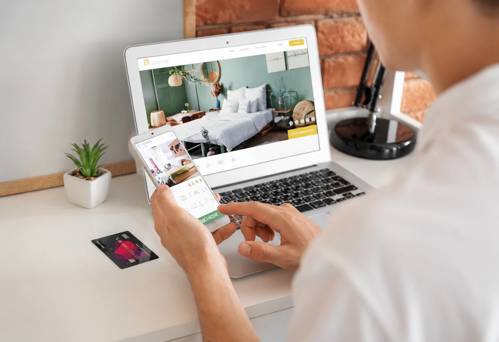
- Arrival and check-in: the first impression
Check-in is the first physical touchpoint — and first impressions are not easily undone. The trend is moving towards less friction: mobile check-in, digital keys, self-service kiosks in the lobby.
According to McKinsey research, these solutions can double the likelihood of a guest returning. However, most guests still want the option to speak with someone — for a special request, a question, or simply a warm welcome that sets the tone for the entire stay.
What this means for your hotel: The goal is not to remove the human element, but to remove the paperwork — so that staff can focus on genuine hospitality.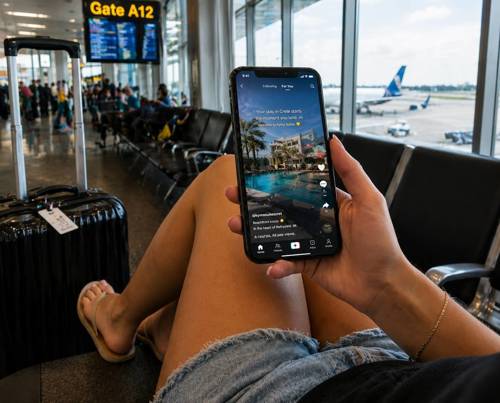
- Stay: where everything is decided
The stay is the largest and most important part of the journey. This is where a hotel either fulfils the promises it made — or loses the guest for good.
According to the EHL Hospitality Outlook 2026, hotels that prioritize ancillary revenue sources show up to 30% higher profitability. Meanwhile, hotels that use automated upselling strategies report increases in additional revenue of 20%–30% per guest.
Service during the stay must be proactive rather than reactive. Gathering and addressing guest concerns during the stay is the first step towards turning a dissatisfied experience into a positive one.
What this means for your hotel: Every additional service — from massages to wine tastings — is simultaneously a revenue opportunity and an opportunity for an unforgettable moment. Technology can support this process, but it cannot replace human warmth.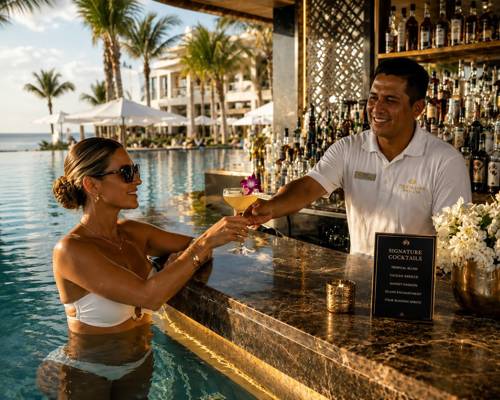
- Check-out and beyond: the last impression that drives return stays
The experience does not end at departure. 81% of travelers always or frequently read reviews before booking, and 93% consider them the most trustworthy source. A one-point improvement in a rating has a direct impact on revenue and on Average Daily Rate (ADR).
A well-designed hotel email marketing strategy — from a genuine thank-you to a targeted offer for a future visit — can turn a one-time guest into a loyal one. Acquiring a new guest costs significantly more than retaining an existing one.
What this means for your hotel: Treat every check-out as a bridge to the next stay. The guest who leaves satisfied is the best advocate your hotel can have.
How to design a hotel guest journey that works
Do: Map the entire journey from the guest's perspective. Where does friction exist? Where do guests feel pleasantly surprised? Guest feedback is the most useful tool for answering these questions.
Do: Invest more in the touchpoints with the greatest impact on guest perception — arrival, problem resolution, and departure. Not all touchpoints carry equal weight.
Don't: Automate without strategic intent. Technology should eliminate friction, not replace human interaction where it has value.
Don't: Treat the mapping as a one-off exercise. Review the journey regularly against guest feedback, emerging trends, and competitive positioning.
The future of the hotel guest journey
AI as assistant, not replacement. AI systems can already manage complex tasks without human involvement: room allocation based on preferences and booking history, predictive maintenance, personalized upselling recommendations.
This frees up valuable time for staff to focus on the human side of hospitality.
The immersive experience economy. Hotels will need more creative ways to meet the demand for deeper engagement — designing atmosphere through carefully chosen scents, sounds, and lighting that create emotional connection.
Gamification elements, where guests unlock rewards or discover hidden experiences during their stay, will also play a growing role.
Hospitality with positive impact. Sustainability is evolving into something deeper. Hotels are redefining themselves as active participants in the ecosystem around them.
Local culture and authentic destination experiences are becoming central to the stay — and guests are becoming participants rather than observers.
Conclusion
The hotel guest journey has become more complex, more digital, and more demanding than ever. It begins long before a guest decides where to stay and continues well after they have departed.
Every touchpoint — physical or digital — is an opportunity to create something memorable. The balance between automation and human warmth is what defines modern hospitality.
Personalization is not a trend. It is the new reality. And the guest who leaves with a story to tell is the best ambassador a hotel can have.
Ready to optimize every stage of your hotel guest journey?
RevitUp.Direct combines Revenue Management and Digital Marketing to turn every touchpoint into a revenue opportunity.